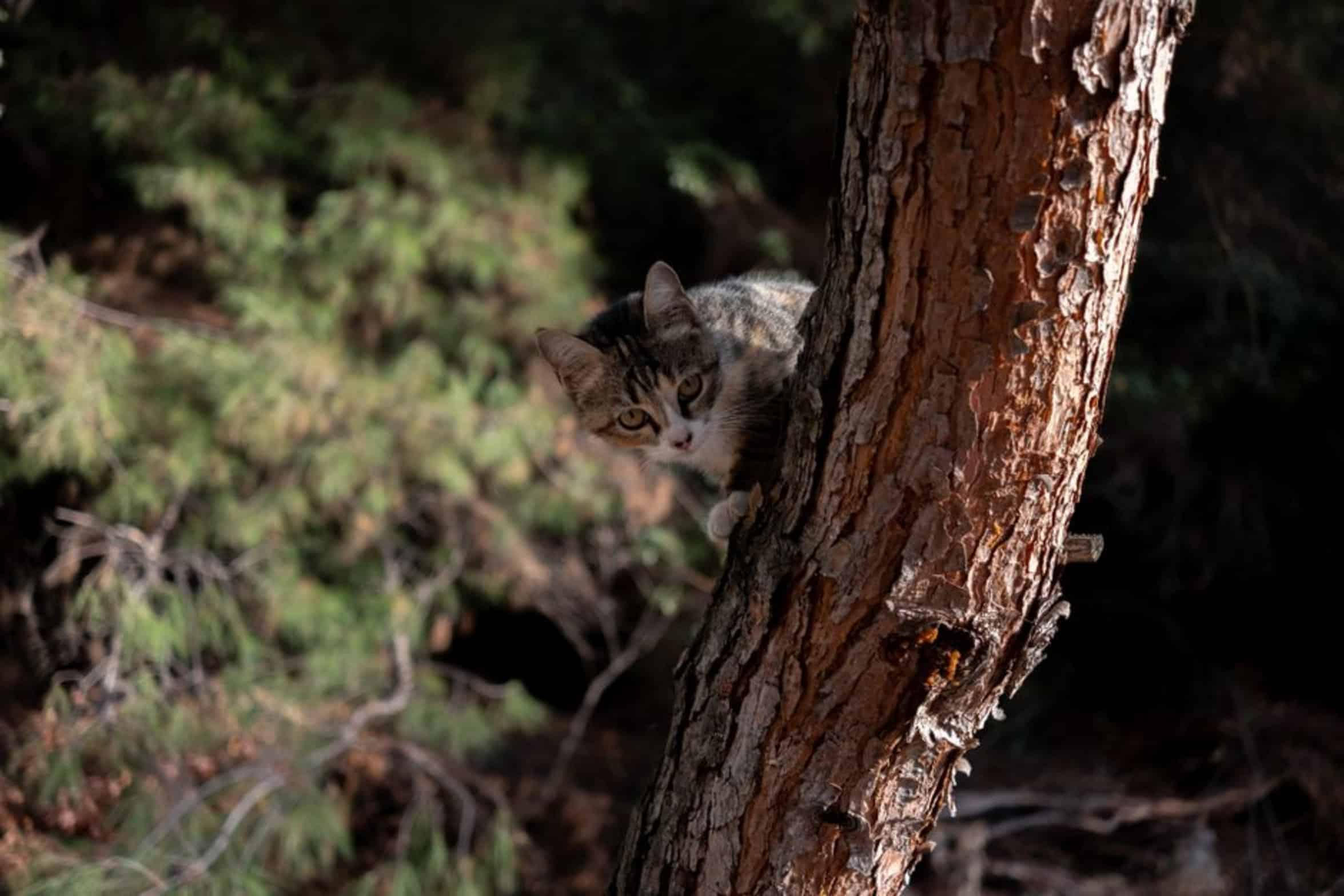
What do you do when your cat gets up on a tall tree and doesn’t want to get back down? Panic starts setting in. “Cat!
Come here!” But he won’t listen. The cat just glares down at you with contempt and fear. Firemen don’t answer calls for cat rescues (well, they probably would if your house was burning).
And neighbors is typically occupied. Then you recall that bank pole. A rescue device designed to bring the cat down.
Using Bank Poles to Rescue Stuck Cats
The Problem of Stuck Cats
It appears as junk left over from construction or even fishing equipment, but it’s a rescue tool designed to bring the cat down without having to go up there yourself. Here’s how it works: The mechanics is straightforward, though the delivery can take some finesse. First, the cat has to cooperate, otherwise known as playing along or, better yet, not currently plotting your demise.
Everyone think they’ll save a cat by going up a ladder. Go up, get the cat, the cat scratches you, you drop down, the cat’s fine. That’s how it usually goes when someone tries to save a cat without help.
How Cat Rescue Poles Work

With bank poles, a ladder is not needed. There’s no one having to go up; you’re staying down here and just reach in, up among the branches. Before there was an industry of trained wildlife rescuers, there was necessity: This tool were invented because people needed it.
And why else does it work so well? Because it recognizes physics of the situation: The cat doesn’t want to come down, and neither do you. The pole connect the two points.
Choosing the Right Pole Material
It sounds easy enough: just a long, collapsible piece of either carbon fiber or fiberglass with some kind of heavy-duty nylon or rope loop on the business end. The physics works like this: you move the loop around the cat’s body or neck and pull on it slowly. Cat goes down.
The key is how well you can work the loop. Is it too big, so that it falls through the cat’s head? Is it too small, so it won’t move up far enough onto the branch?
Is it too loose, slipping off? Is it too tight, risking injury to the cat? And what about the pole itself?
Does it bend and flex when you need it most? Is it so light that it flops all over the place as you try to control it with one hand? Or is it so rigid that it saps your energy?
A quality pole will feel like part of your own body, holding its form and letting you do the work. Avoid cheap aluminum ones, they bend and flex and are sometimes unreliable at the wrong moment. The biggest mistake made by rescuers is their positioning.
Positioning and Approach Techniques

It isn’t like using a fishing pole and waving it around. You have to approach cat from below. Slowly raise that loop towards the cat’s head.
Remember, cats is territorial. They won’t take kindly to someone grabbing them from behind. They’ll swat at you.
Slipping the Loop Safely
What you want to do is slip the loop over the cat’s neck. Do not wrestle the animal. So you’ve got to be patient.
Wait for the cat to move its weight. Wait for a moment of distraction. Slowly and carefully move the loop up the branch.
The cat will feel it moving. He might even try to jump. Be prepared to tighten the loop a bit as he jumps away.
The tension shouldn’t be tight, just enough so that it holds shape. The final test is the drop. Now that the loop is set, you lower the pole.
Lowering the Cat Without Panic
The cat will probably scream/hang on/try to resist. Don’t worry; this is normal. Yanking is bad because yanking makes a cat panic, and when a cat panics, she comes out clawing.
Clawing hurts both parties. Drop the pole slowly. Let the cat know that her feet are about to hit something.
Cats who realizes they’re safe may actually slide down the branch by themselves. Other cats need to be eased the rest of the way down. That’s where the pole’s stiffness comes in.
If the pole is too limp, it’ll bend under the cat’s weight. Once the pole is stiff, it passes the weight through your hands to the ground. Then you’re the anchor, and the cat is the load.
Safety Precautions for Rescuers
Remember, it’s all about safety here. Long sleeve clothing, please. Cats are clawed up creatures.
A distracted kitty can still make contact. Steady yourself too. A falling branch will bring both of you down to earth.
Before climbing up, check out the limb. Is it rotten? Is it cracked?
If unsure about the tree, don’t go there. Get help. Admitting failure isn’t failure at all.
The pole is just a tool. When circumstances align, steady hand, solid tree, house cat… It does its thing.
Why Simplicity Wins in Emergencies

These are old school bank poles. There is no technology. There are no batteries to charge.
There are no settings to tweak. It is a rope on a stick. That’s all.
And that’s what makes it so good. Simple is its strength. It works when there is no signal on your phone.
It works when it’s dark. It works when it rains. It works when you need it most.
High tech can get us through tough times but sometimes we just want something simple and straightforward. Something that does one thing really well. Need to rescue your cat from 20 feet up on a limb?
Don’t look for an app. Look for the pole. Have one handy because it might just save the day.