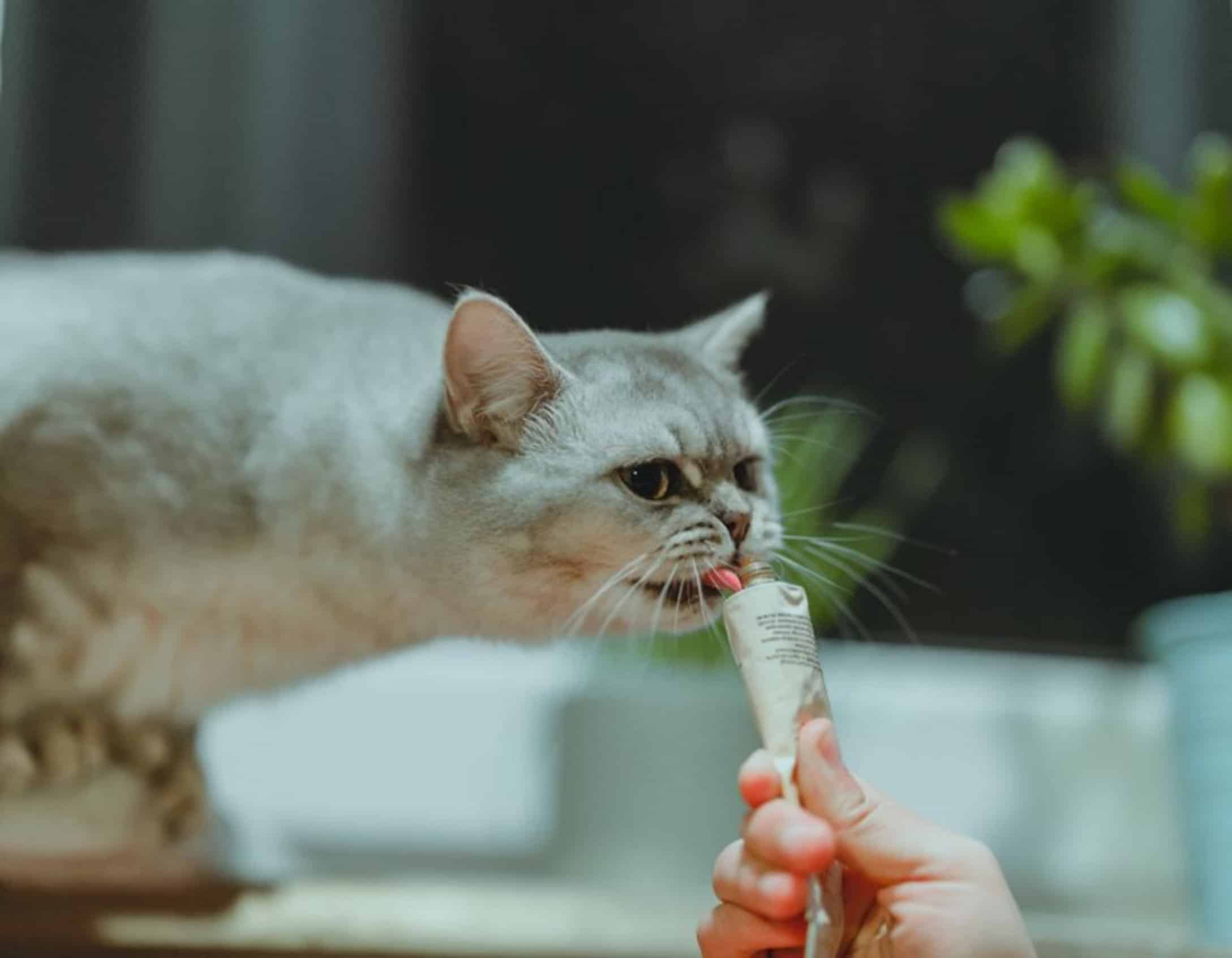
Punch Bait: When a mess happens with sticky treats, the bond between you and your cat shift from casual coexistence to a sticky situation. Maybe it begins with a tube of cream or a lickable gel. Slowly, the cat licks the food.
A thin strand extends from the mouth to the source. The cat pulls away, the strand snaps back. The cat is covered in the treat.
Owners typicaly assume it was an accident. After all, they reason, cats is clumsy. But that isn’t true.
It’s engineered to be palatable to their taste buds. It’s designed to be sticky, it’s a feature; it’s not a bug. It holds the flavor on their tongue.
And there lies the issue: using the incorrect tool for the job. Cats are tools. Use the wrong one and they becomes the tool.
So why? Three things explains it all: 1) what type of product is being used; 2) how a cat’s face functions; and 3) your approach to delivering the treat to the cat. All three of these ingredient form a clean treat experience…
Or a total disaster on the groomer’s end. You don’t want to get rid of the mess, you just want to control where it goes…from the treat to the tongue. This brings us back to the main suspect: Product density.
How To Manage Sticky Cat Treat Messes
Understanding Viscosity and Treat Texture
How does that compare with a broth versus a wet food puree? Broth is liquid. It runs.
There is very little friction. A puree has more surface tension. It clings.
Products such as Wellness Core or Temptations is formulated to maintain their shape. Cats find this appealing. But it also make the strand remain long.
The longer the strand, the longer it holds together in a bridge until breakage occur. Thicker = longer bridge. Cats were not built to suck up thick liquids.
Feline Anatomy and Licking Mechanics
We have human lips. Flat ones that can seal around a spoon. They are flat and stick to the bottom of a spoon.
A cat has a long snout and a backwards barb-tongue. This is great for scraping meat off and grooming. It’s awful at picking stuff off a flat surface without dragging.
As soon as the cat starts licking something sticky (like a treat), the barbs grab hold off the surface tension. The cat’s tongue pulls back and the strand stretches. The cat then advances toward its target but the treat remain stuck to the spoon.
The strand eventually snaps off. Typicaly this occurs in mid-air. Then all sorts of residue coats their whiskers, chin, and chest.
This is what’s wrong: a flat spoon. That’s the enemy. It provides the treat with too much grip on the world.
Choosing the Right Delivery Tool
What you need are a different shape for the delivery: something more curved, and smaller. It should of be something like this. A treat spoon (there’s such a thing) or even a coffee spoon would do it.
You’ll notice that these has a bit of a curve to them. This lets the treat pool instead of spreading out. There is less surface area for the cat to lick.
As the cat touches it with his/her tongue, there’s some rolling motion to the treat. Less drag coefficient. The flavors reaches the cat without any bounce back.
Using Textured Surfaces for Clean Feeding
To add variety, change the surface by putting the treat onto something that is not smooth. Use a piece of sandpaper. You could also use a textured mat.
Something with roughness will break the surface tension right away. There’s no need for a tool to make a bridge; the cat can simply lap up the treat. This option works well for aggressive lickers.
Lapping becomes more of a casual activity than a precision move. Treat will stick to whatever you’re using as the surface. It is not the end of the world.
A clean face are a good thing. Timing is another important factor. If you serve up the punch bait while the cat is hungry and/or agitated, you get sloppy lickage.
Timing and Feeding Environment Tips
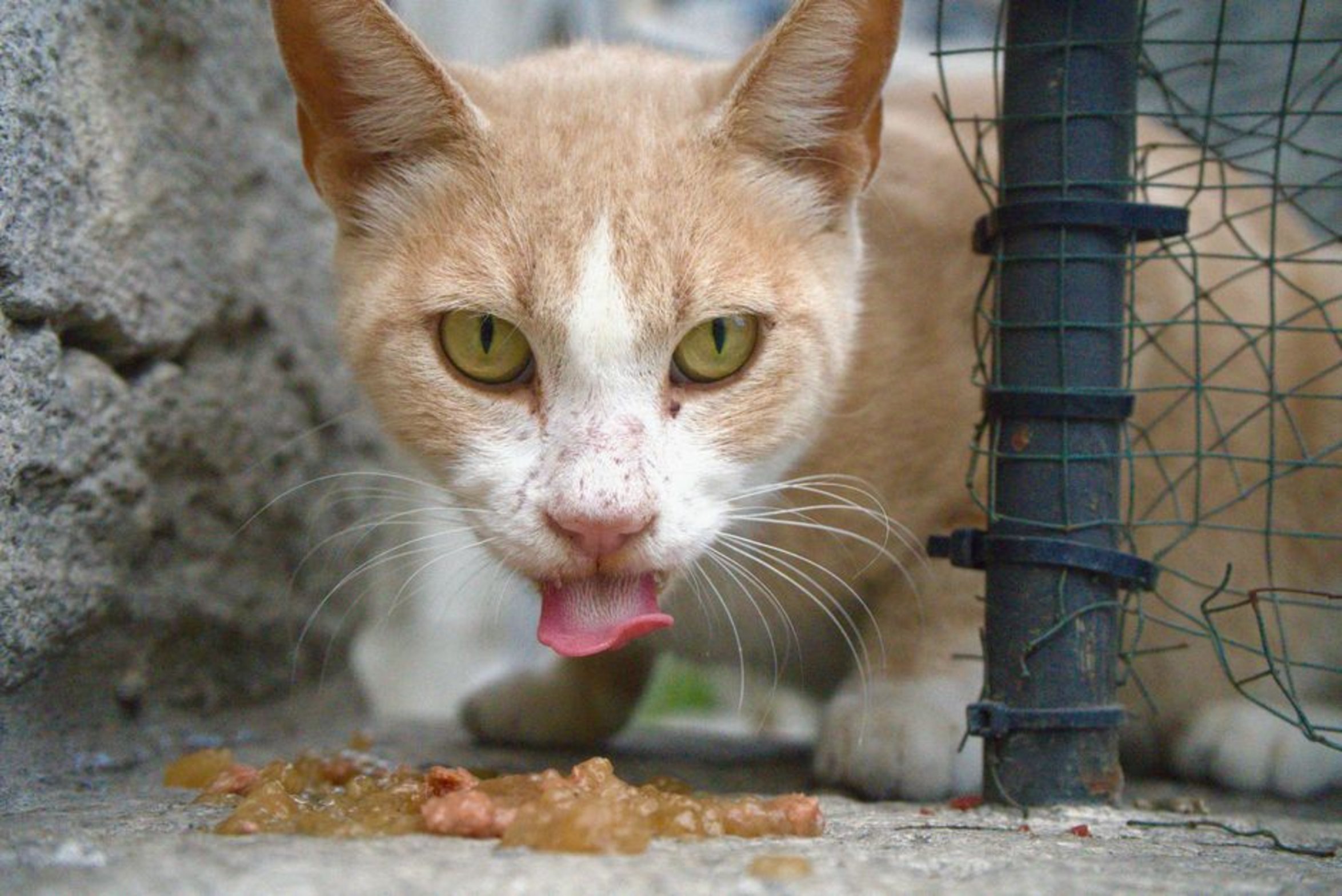
Getting it beats technique. Serve up that treat in a calmer moment, which could be within a structured feeding routine, and the cat will lick more slowly. That provide an opening for guiding the cat’s mouth, and also an opportunity to wipe away any excess before it has spread.
Flavor matters, but so does patience. Pink goo cats on social media make us laugh. They remind us that it’s silly.
But the silliness masks an easy-to-miss physics question: Viscosity meets anatomy. The flavor want to stay put. Feline favor seeks to cling.
And so you intervene. How? When?
Which tools allows the taste to stay on the tongue? It is not the nose. Unless you’re using a spoon.
Next time you unscrew a tube, remember that spoon. Tissue is also good in case of goo.