There’s a certin kind of anxiety that comes with frying catfish. There you are at the stove, watching the oil ripple like a blurry pool that promises good things, or disaster, depending on your actions. Will this be a crispy masterstroke of cooking, or a greasy mess of regrets?
It’s an odd fish: fatty but delicate; tender but fragile, and easily turned into a wet, shapeless wreck when handled improperly. But when done right, it’s one of the most satisfying meals you’ll ever put in your mouth. It’s sweet, mild flesh, carrying strong seasoning without complaint.
How To Cook Catfish Fillets Properly
The Anxiety of Frying Catfish
But how do you get there? It comes down to timing. Three to five minutes on each side; most recipes say something like that.
While that’s where you should start, don’t assume that means exactly 3-5 minutes no matter what. It’s a trap. There are other variables in the frying pan besides time.
Timing and Thickness Variables
How hot was your oil? Was your fillet thick or thin? How wet was your coating?
You can be thinking about time when you should of be observing the fish because the actual physical signs are what count. Look at the clock and you’ll be guessing until kingdom come. So let’s be clear about one thing: thickness matter.
Every fillet isn’t a square. And if you’ve got catfish fillets from different farms or regions, they won’t all be the same size. Now, that thin piece of wild caught catfish may cook up in a minute and a half per side.
That thick chunk of farm raised catfish will take you closer to four. You’ve got to get the heat from the outer crust to the middle. Too cool and your fish is going to steam and go mushy.
Too hot and your fish is going to burn long before it gets cooked through. Match the time to the piece of fish you’re holding. A timer is unreliable; visual clues are much better.
Visual and Tactile Doneness Signs
The target for color is a golden brown, but more importantly, the texture of the flesh will change. Translucent means raw, and opaque means cooked. White and opaque is cooked catfish.
With the side of your spatula, give it a gentle poke; if it’s jiggly, it isn’t ready. Firm means go. Soft and rubbery?
More time! Flakes when poked with a fork? Done.
The feel is immediate and accurate. The feedback is accurate regardless of the thickness of the fillet. No concern for oil brand.
Maintaining Correct Oil Temperature
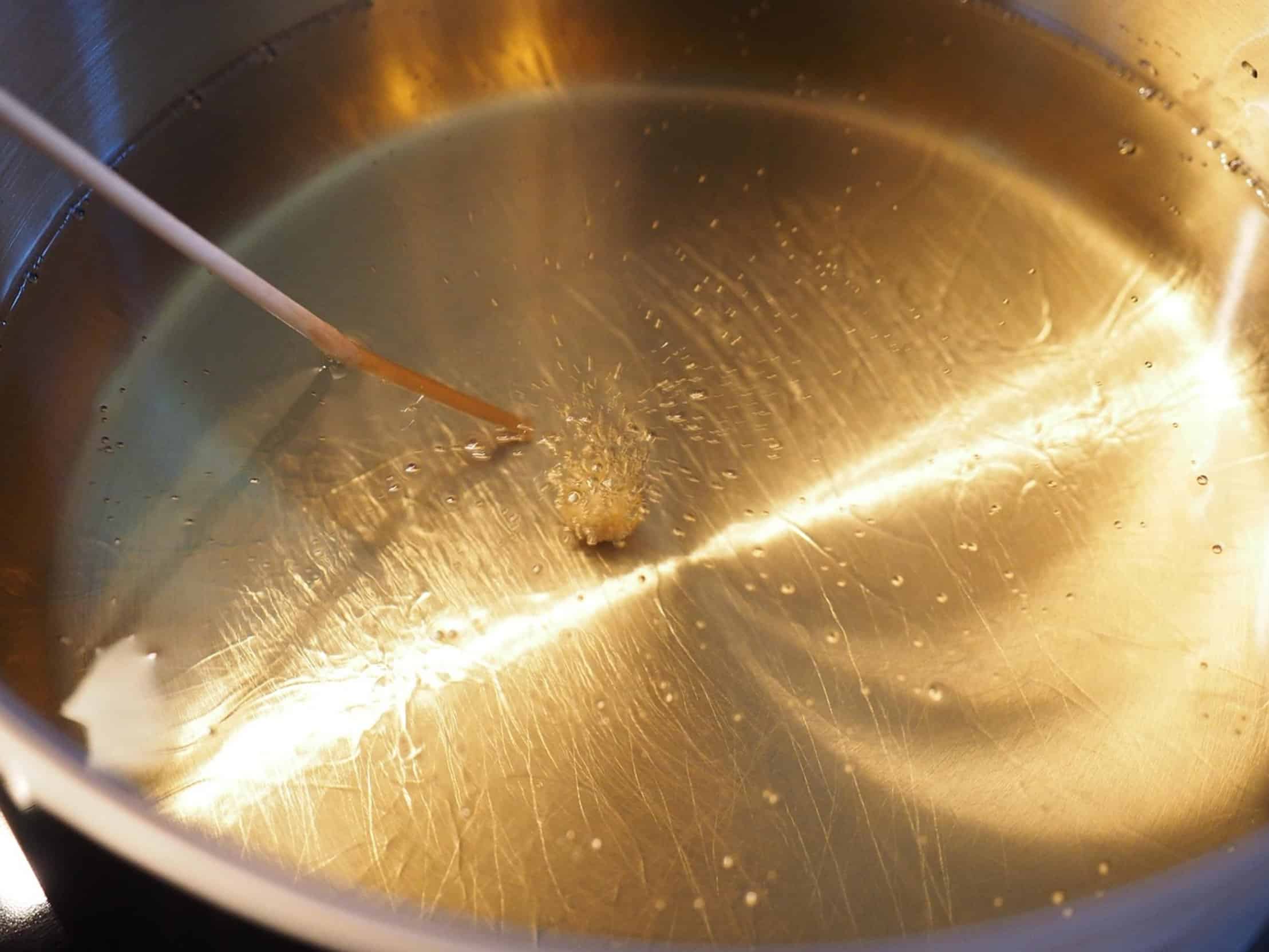
The secret variable nobody ever tells you about is the oil temp. It should be around 350 degrees Fahrenheit. Get yourself a thermometer if you don’t have one yet.
Going by sight alone puts you at risk. If the oil is too cold, it will soak into the batter like a sponge. The result is greasy, heavy fish that will weigh you down.
If it’s too hot, the outside cooks immediately but the inside stay raw. You’ll end up with a crunchy outside and a cool, unsafe middle. The sweet spot is when the oil penetrates evenly and steadily.
Steady even penetration creates a gradient between tender insides and crispy outsides. Now remember, all of this depends on what type of coating you use. A heavy wet batter will take longer than a light dusting of cornmeal.
Coating and Pan Crowding Effects
In fact, cornmeal sticks right to the surface of your fish, whether it’s skin-on or not, and forms a very thin crust. This crust shields the moisture but doesn’t prevent heat from penetrating. A wet batter, think traditional Southern fried, is more of an insulator.
It insulates the moisture and keeps it contained, but it will take longer to brown. So if you’re doing something with a heavy wet batter, add another minute or two. And don’t overcrowd the pan.
Overcrowding will cause the oil temperature to drop quickly. Once the temp starts dropping, it’ll extend the cook time in unpredictable ways. Perception is also part of it.
Seasoning and Flavor Balance
If there are some small textural flaws, a seasoned crust will distract from them. Dredge the fish with black pepper, garlic powder and paprika. This adds both more flavor and color.
The darker spices also hide any uneven browning of the outside. And then they differ in flavor to cut through the richness of the oily fat. That’s why a wedge of lemon or a spoonful of tartar sauce goes so well with catfish.
Acid cuts the oil. Spice cuts the bland. A balanced plate is good.
Resting and Preserving Crispness
The last step is to let the fish rest. When you remove the catfish from the oil, there is still internal heat carrying over. For another minute or two the inside will finish cooking.
That’s what we call carryover cooking. You have pulled it right when it flakes and now it’s going to be dry before you get to it. Pull it when it’s barely done.
Put it on a wire rack to rest. Do not put it on paper towels. The reason you don’t put it on paper towels is they will trap the steam up against the bottom of the fillet.
The steam will make your crust soggy. The air circulation of a wire rack keeps it as crisp on the bottom as it was on the top. You might end up with a soggy regret, but you can produce a crispy masterpiece when frying catfish.
Relying on Your Senses
There’s not even precision. Frying catfish is all about watching and learning. At any given moment, there are three things happening at once: time, moisture, and heat.
Time is an estimate. The true instruments are your nose and your eyes. Trust them.
Smell the fish. Does it have a fishy odor? No. Does it smell burnt?
No. Does it smell nutty and savory? Yes! See the color.
Is it golden? Yes. Feel it.
How does it feel? Firm but tender. When you can rely on your senses instead of the timer, then you’ll start to relax.
Then you won’t have to worry about every second spent in the pan. You’ll take out fillets that are crisp on the exterior while remaining tender on the interior. That is our goal.
Because if you do everything right, then you get to eat. And you don’t have to worry about making dinner. The fish is done when it feels, smells, and looks right.